
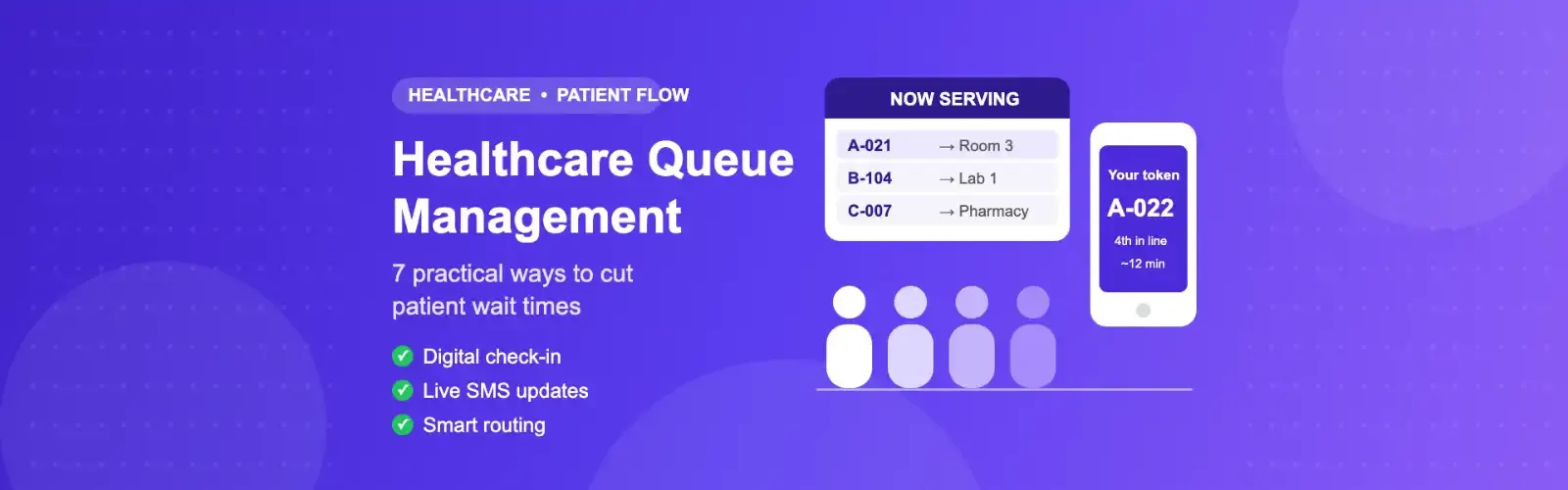
Walk into almost any busy clinic or hospital outpatient department and you will see the same picture: a crowded waiting area, patients checking the clock, and front-desk staff answering "How much longer?" again and again. Long waits are more than an inconvenience. They raise stress for patients who are already unwell, increase the risk of infection in packed rooms, and wear down staff who spend their day managing frustration instead of care.
The good news is that most waiting-room problems are not caused by a lack of doctors alone. They come from how patients arrive, check in, and move between departments. That is exactly what healthcare queue management is about. In this article we look at what it means and seven practical steps any clinic, lab, or hospital can take to make visits calmer and faster.
What is healthcare queue management?
Healthcare queue management is the process of organising how patients check in, wait, and get called for service across a medical facility. A traditional setup relies on paper tokens, handwritten registers, and a receptionist calling names. A modern setup uses digital check-in, automated calling, and real-time data so that every department can see who is waiting and for how long.
The goal is simple: get the right patient to the right counter or doctor at the right time, with as little idle waiting as possible.
Why long waits hurt clinics and patients
- Patient satisfaction drops. Waiting time is one of the most common complaints in patient feedback, even when the treatment itself was good.
- Crowding creates health risks. Full waiting rooms make it harder to separate patients with infections from vulnerable people such as the elderly or pregnant women.
- Staff burnout increases. Reception teams spend hours on manual registration and handling complaints.
- No-shows and walk-outs rise. Patients who cannot predict their wait often leave or skip follow-up visits.
7 practical ways to reduce patient wait times
1. Let patients check in before they arrive
Online booking and remote check-in let patients join the queue from home. They arrive closer to their actual turn, which shortens the time they physically sit in the waiting area and spreads arrivals more evenly through the day.
2. Use self-service kiosks or QR code check-in
A simple kiosk or a QR code at the entrance removes the bottleneck at the front desk. Patients enter basic details, choose the service they need, and receive a digital token in seconds, while receptionists focus on patients who need extra help.
3. Send real-time updates by SMS or app
When patients get a message saying "You are 4th in line" or "Please proceed to Room 3," anxiety drops. They can wait in a café or their car instead of crowding the hall, and they return just in time.
4. Separate queues by department and priority
Not every patient needs the same path. Routing people into separate queues for consultation, lab tests, pharmacy, and billing prevents one slow line from blocking everything else. Priority rules can also move emergencies, senior citizens, or pregnant women ahead fairly and transparently.
5. Display clear calling screens
Digital display boards that show token numbers and counter assignments reduce confusion and the need for staff to shout names. They also give the waiting area a more organised, professional feel.
6. Track data and fix the real bottlenecks
Average wait time, service time per doctor, and peak hours tell you where the problem actually is. Maybe the lab gets overloaded every Monday morning, or one counter is consistently slower. With data, managers can adjust staffing and schedules instead of guessing.
7. Collect feedback after each visit
A short survey after the appointment shows how patients experienced the wait. Combined with your queue data, it helps you measure whether changes are actually working.
Choosing a queue system for your facility
When you evaluate tools for healthcare queue management, look for a solution that supports multiple check-in options (kiosk, QR code, and online booking), handles several departments in one place, sends automatic notifications, and gives you clear reports. It should also be easy for elderly and less tech-savvy patients to use, and simple for staff to learn without long training.
Start small if needed: pilot the system in one department, such as outpatient consultations or the lab, measure the change in wait times, and then expand.
Final thoughts
Shorter waits do not always require more doctors or bigger buildings. In many cases, a better flow is enough. By letting patients check in early, keeping them informed, splitting queues sensibly, and using data to guide decisions, clinics and hospitals can deliver a calmer experience for patients and a more manageable day for staff. Small changes in how the queue works can make a big difference in how care feels.